

Every synthetic rug in your home is shedding microplastics into your air
The fiber shedding from synthetic rugs — polypropylene, nylon, polyester — is now among the most documented sources of indoor microplastic exposure. A 2024 study in Frontiers in Environmental Science found indoor microfiber concentrations in homes to be 2–4 times higher than outdoor levels, with carpets and area rugs identified as a primary source. In 2026, Radzi et al. confirmed the mechanism in Water, Air, & Soil Pollution: synthetic pile fibers shed micron-scale particles with every footstep, vacuuming, and air current, and those particles remain suspended for hours.
The rugs we recommend here are made from materials that do not shed synthetic microplastics: wool, cotton, jute, sisal, and seagrass. They are the minority. Roughly 80% of area rugs sold in the US are made from polypropylene or nylon.
What we look for
There are four layers to rug toxicity. Most buying guides stop at the pile fiber. We don't.
1. Pile fiber — the first filter
Wool, cotton, jute, sisal, and seagrass are the only pile fibers we'll list. Polypropylene, nylon, polyester, and acrylic are plastic. They don't belong on this list, and "low-VOC" or "GreenGuard certified" poly-blend rugs don't change that — those certifications address off-gassing, not microplastic shedding.
2. Backing material — where most guides miss the mark
The majority of rug backings are synthetic latex (styrene-butadiene rubber, or SBR). SBR off-gasses VOCs, degrades over time into fine dust, and is the primary source of new-rug smell that lingers for weeks. Natural rubber (FSC-certified, from Hevea brasiliensis) is acceptable. Wool felt is fine. Jute mesh backing is fine. A cotton hem with no secondary backing is fine. Any backing described as "latex," "foam," or "recycled material" without specifying the exact chemistry is not.
3. Flame retardants — the hidden cost of foam
Any rug with a foam or synthetic backing may contain chemical flame retardants — in the backing itself or as a treatment on the pile. Wool passes California's TB117-2013 standard without chemical treatment. Jute and sisal generally do too. Look for "no chemical flame retardants" or "wool flame barrier" stated explicitly on the brand's materials page before trusting a certification.
4. Dyes — natural vs. chemical
GOTS-certified rugs use dyes that meet strict limits on aromatic amines, heavy metals, and formaldehyde. AZO dye restrictions are mandatory under GOTS. Chemical dyes without those restrictions are common in conventional rugs and have been linked to skin sensitization and indoor air contamination. Undyed rugs sidestep this entirely.
OEKO-TEX vs. GOTS — why the distinction matters
OEKO-TEX Standard 100 tests the finished product for harmful substance residues. It restricts permethrin (the mothproofing chemical common in wool rugs) but sets a residue limit rather than prohibiting it outright. GOTS prohibits synthetic pesticides in production, including permethrin-based mothproofing. For wool rugs specifically, GOTS is the stronger assurance against pesticide residue.
Our picks
1. Armadillo Atlas Classic Rug — Best overall
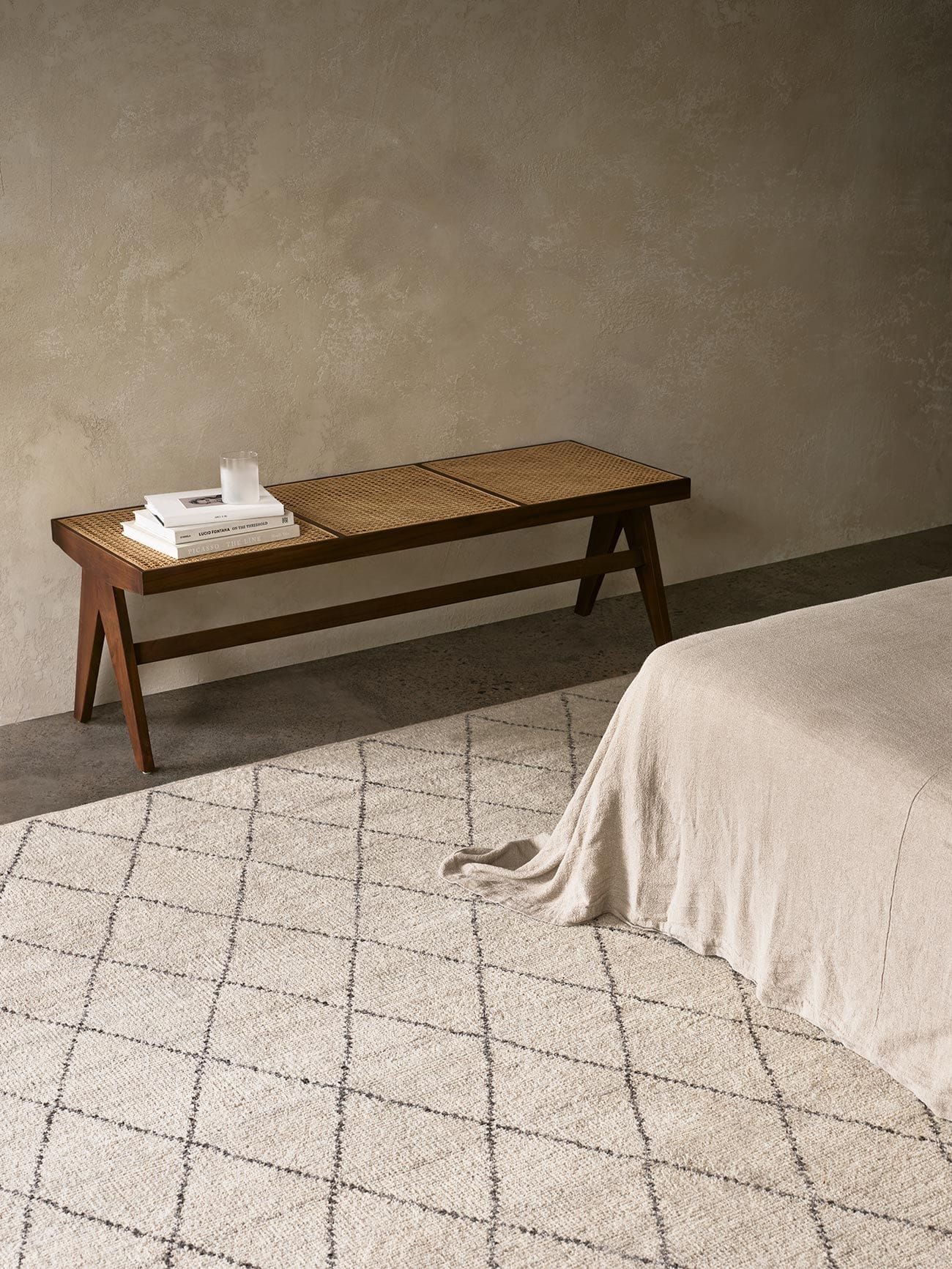
Armadillo is a B Corp. Its Atlas line carries a Declare Label — a materials transparency disclosure from the Living Future Institute that lists every ingredient in the product, including dyes and finishes. The pile is 100% wool on a jute foundation: no synthetic backing, no latex. Armadillo discloses its wool source (New Zealand, mulesing-free) and dye chemistry on its materials page. The Armadillo Atlas sits at the top of this list because it's the only pick here combining a verified materials declaration (Declare Label, checkable in the Living Future registry) with a B Corp brand-level accountability standard.
2. TazRugs Beni Ourain Hand-Knotted Wool Rug — Best handmade artisan pick

Beni Ourain rugs from Morocco's Atlas Mountains are one of the oldest continuous rug-making traditions: undyed mountain sheep wool, hand-knotted pile, no backing. TazRugs sources directly from weavers in the region under Fair Trade certification. The TazRugs Beni Ourain is available in traditional ivory-and-black undyed wool or plant-dyed colorways. No synthetic dyes, no backing, no chemical flame retardants — the dense wool pile passes fire standards without treatment.
3. Nature's Carpet Element Wool Rug — Best performance wool

Nature's Carpet is one of the longest-running natural-fiber carpet companies in North America. The Element is 100% New Zealand wool pile, undyed, with a jute mesh backing. Certifications include CRI Green Label Plus (low VOC), GUT (the German independent emissions standard for floor coverings — stricter than GreenGuard in several categories), and LEED-contributing status. If you're specifying a rug for a room that needs to meet strict indoor air quality standards, this is the only pick here with GUT certification.
4. Nehal Handwoven Area Rug — Best certified wool at this price

The The Citizenry Nehal is one of the few wool rugs that stacks OEKO-TEX Standard 100 with Fair Trade certification for the weaving community. The pile is 100% wool with no secondary backing — just wool on a woven foundation — and The Citizenry discloses both certifications on the product page. At $412 for a 5'×8', it bridges the gap between mid-market jute rugs and the high-end natural-fiber category. No latex, no SBR, no undisclosed backing material.
5. Anika Handwoven Jute Area Rug — Best natural-dye jute

Most jute rugs use chemical dyes with undisclosed chemistry. The The Citizenry Anika uses natural dyes and carries both OEKO-TEX Standard 100 and Fair Trade certification — unusual for jute at this price. The 80% jute / 20% cotton construction is flatwoven with no secondary backing, keeping the materials list entirely natural. Handwoven in India under Fair Trade conditions. At $322 for a 5'×8', it's one of the strongest certified jute options available at this price point.
6. nuLoom Rigo Hand-Woven Farmhouse Jute Rug — Best jute value

The nuLoom Rigo Jute Rug is 100% natural jute, hand-woven with no secondary backing. Jute is a bast fiber grown without irrigation and with minimal pesticide input — among the lowest-footprint natural fibers available for rugs. At $60–$300 depending on size, this is the most affordable entry point on this list. No certifications, but the materials disclosure is straightforward: it's jute.
7. Safavieh Natural Fiber NF447A Chunky Jute Rug — Best affordable jute
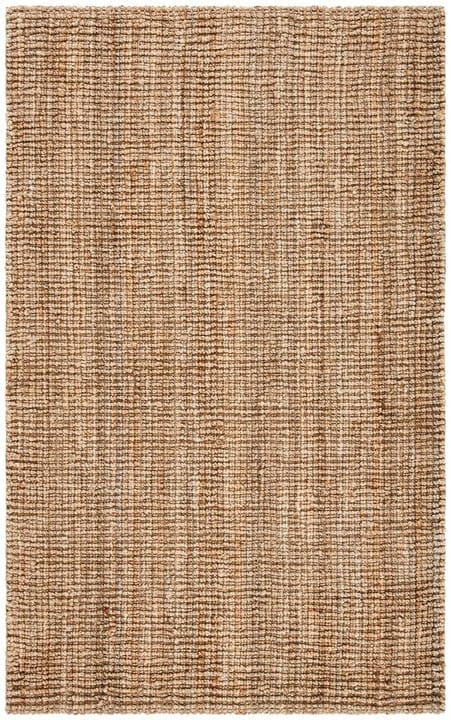
The Safavieh NF447A is 100% jute with a chunky hand-woven construction that holds its shape better under furniture and foot traffic than most budget jute rugs. No synthetic backing, no dyes. Available at $90–$400 across a range of sizes, and widely stocked. For anyone whose first priority is price and who wants to verify materials in under a minute, this is the clearest path.
8. Daniela Farmhouse Chunky Jute Area Rug — Best tasseled jute
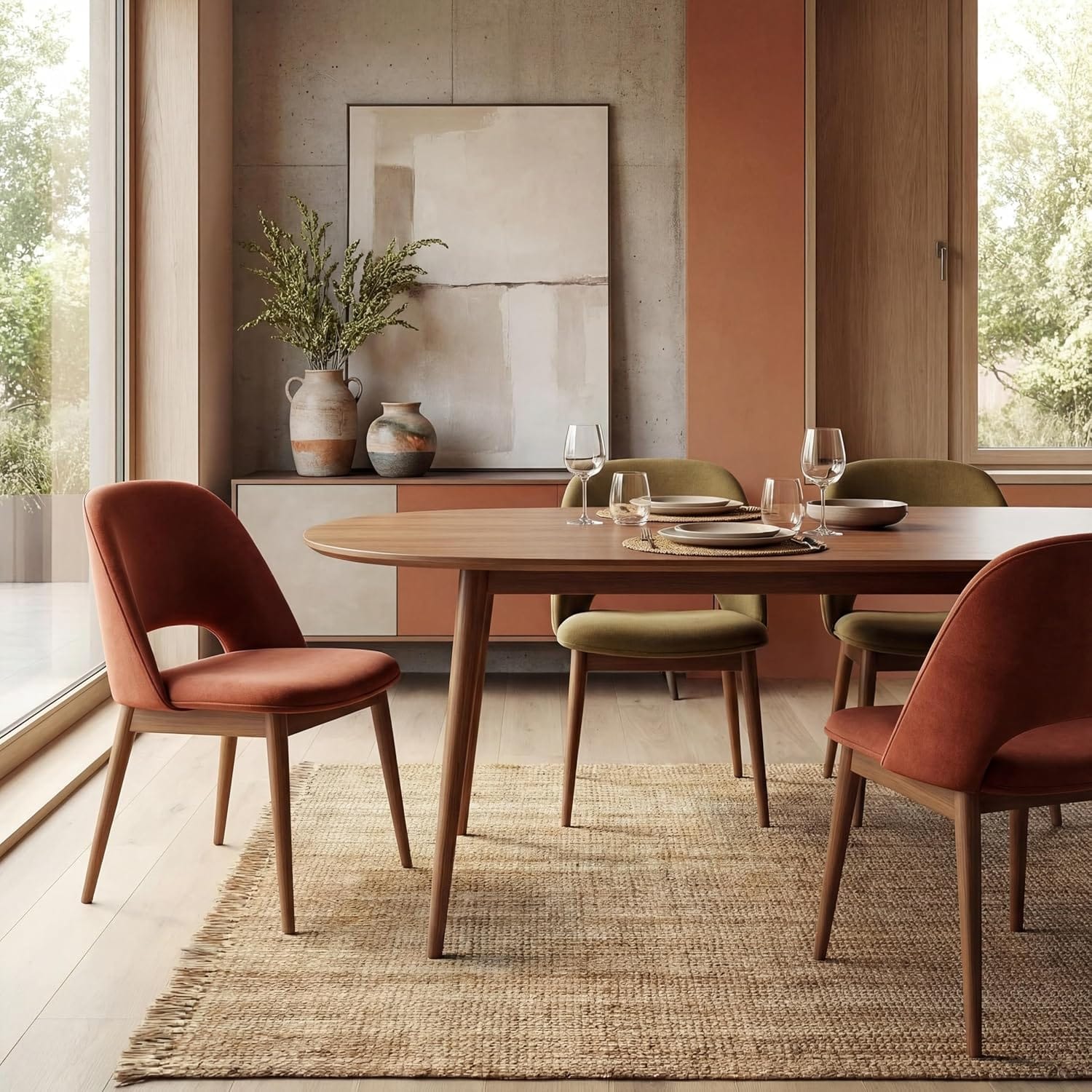
The nuLoom Daniela Jute Rug uses a chunkier weave than the Rigo, with a knotted tassel border that reinforces the edge without requiring a latex or rubber backing. The pile is 100% natural jute with no secondary backing disclosed. A good option when the Rigo's simpler weave isn't the right texture for the space — the Daniela's heavier construction also holds up better under furniture legs.
What we passed on
FLOR carpet tiles — FLOR markets itself as the sustainable modular carpet option, with recycled content and replaceable squares. The pile is nylon. Every step sheds synthetic microfibers. Nylon doesn't belong in a non-toxic guide regardless of manufacturing claims.
"Natural" rugs from major retailers with undisclosed backings — Many Home Depot, Target, and Wayfair jute or sisal listings use natural fiber for the pile but back them with SBR latex. The backing is often disclosed only in fine print, or not disclosed at all. If a retailer can't confirm the backing chemistry, the rug doesn't make the list.
Shaw Floors wool carpet (GreenGuard Gold) — Shaw offers GreenGuard Gold-certified wool carpet, but the backing uses SBR latex bonded to a jute mesh. GreenGuard Gold tests emissions from the finished product; it does not require a natural backing. We don't list anything with SBR backing.
Cover image: Lisa Anna via Unsplash (Unsplash License) — source.
