Why the standards are different for babies
Infant skin is not scaled-down adult skin. A newborn's stratum corneum — the outermost skin layer — is roughly 30 percent thinner than an adult's, and systemic absorption rates are correspondingly higher: studies using radiolabeled topical agents have measured absorption rates 2.3 times greater in infant skin than in adult controls (Barker et al., Pediatric Dermatology, 1987). The acid mantle, which acts as a microbial and chemical barrier, does not fully mature until approximately two years of age (Fluhr et al., Experimental Dermatology, 2012).
That gap matters when you're reading lotion ingredient lists. A preservative or fragrance molecule at a concentration that is considered safe for adult skin reaches systemic circulation at a meaningfully higher fraction when applied to an infant. This is the core reason our criteria for baby skincare are stricter than what we apply to adult body lotions.
What we look for (and what disqualifies a formula)
Phenoxyethanol is the ingredient most mainstream guides don't explain. It's the dominant broad-spectrum preservative in modern personal care because it replaced parabens, which had worse press. The EU Scientific Committee on Consumer Safety restricted phenoxyethanol to 0.4 percent in leave-on products for children under three (SCCS/1555/15, 2016). The US has no equivalent limit.
This creates the Tubby Todd situation. Tubby Todd's All Over Ointment contains phenoxyethanol and sodium benzoate — both legal, both present below any US limit — but the formula fails the EU infant standard. The brand is cited approvingly on most "non-toxic baby" lists. It appears in our "what we ruled out" section instead.
EWG Verified vs EWG score 1 is the other confusion that sends parents toward the wrong products. A product with an EWG score of 1 simply means the brand submitted ingredients to EWG's database and those ingredients are low-hazard according to EWG's own rubric. EWG Verified is a separate, paid certification program with stricter standards: prohibited ingredient lists, manufacturing standards, and independent formula review.
Burt's Bees Baby Nourishing Lotion is frequently cited as "EWG Verified" by mainstream roundups. It is not. Burt's Bees Baby products carry the EWG score (self-reported), not the EWG Verified mark. Gimme the Good Stuff rates several Burt's Bees baby products as "Sneaky" because they contain phenoxyethanol. The distinction between the score and the certification is doing most of the work in those conflicting ratings.
No synthetic fragrance. Fragrance compounds are allergen vectors, and in infant skin — which is more permeable and immunologically still calibrating — we apply a bright-line rule. Every product on this list is explicitly fragrance-free or unscented, with confirmed INCI.
Each product was assessed against the published INCI on the brand's own site and the relevant third-party certifications. We do not count brand claims of "natural" or "clean" as evidence — only verifiable certs (EWG Verified, NSF/ANSI 305, USDA Organic) and ingredient-level disclosure.
Our picks
1. Pipette Baby Lotion, Fragrance Free — Best overall
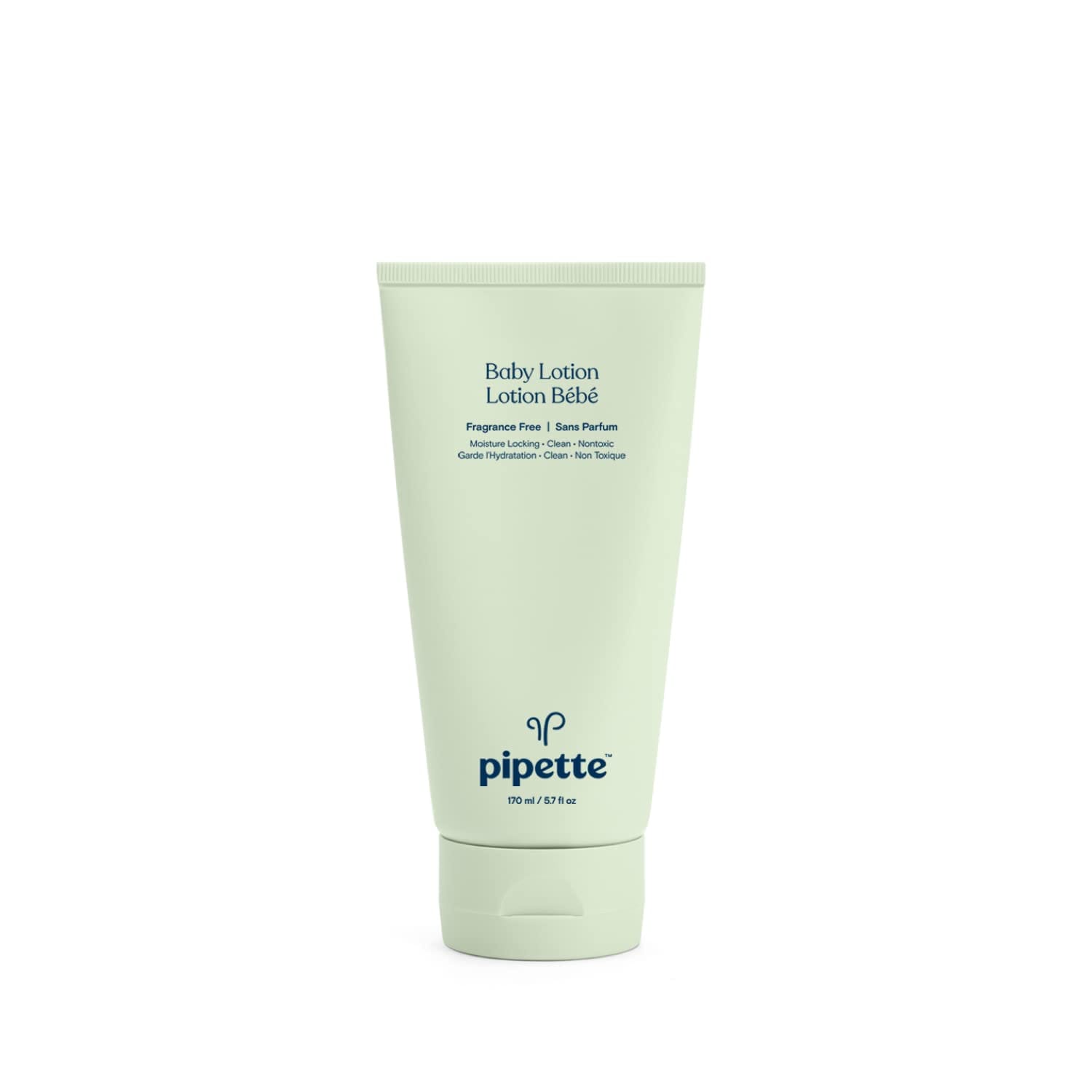
The Pipette Baby Lotion, Fragrance Free earns the top spot on two grounds: ingredient economy and independent verification. The formula is EWG Verified — not EWG-scored, Verified — with 14 disclosed ingredients built around sugarcane-derived squalane and ceramide NP.
Squalane mimics the skin's own sebum and is among the most biocompatible moisturizing agents in the literature. Ceramide NP restores barrier integrity in the same way the body does naturally. No phenoxyethanol, no parabens, no synthetic fragrance, no PEG compounds. The preservative system uses potassium sorbate and ethylhexylglycerin — both EWG Verified-compatible and not restricted in EU infant products.
At $11.99 for 5.7 oz, this is also the most accessible formula on the list.
2. Earth Mama Simply Non-Scents Baby Lotion — Best truly fragrance-free formula
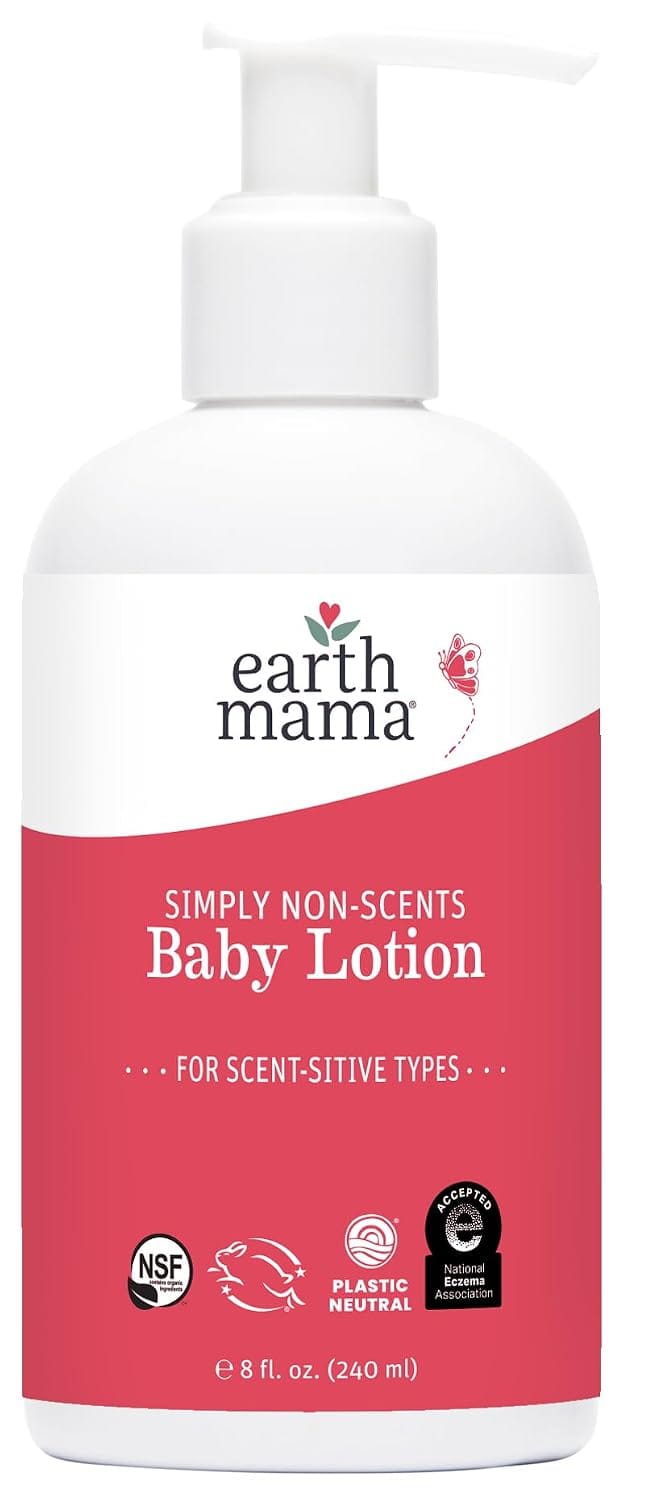
The Earth Mama Simply Non-Scents Baby Lotion is the list pick for parents who have had reactions to other "fragrance-free" formulas. The Oregon Tilth NSF/ANSI 305 certification covers personal care products — a standard with stricter organic content requirements than many USDA-certified cosmetics programs — and the formula is self-preserving through organic acid and extract ratios rather than added synthetic preservatives.
Twelve ingredients, all organic-sourced. Organic rooibos and calendula as the actives. No water-soluble preservative system at all — the olive oil base acts as the carrier and the botanical extracts maintain microbial stability. B Corp and Leaping Bunny certified at the brand level.
3. Babo Botanicals Sensitive Baby Fragrance-Free Hydrating Lotion — Best for eczema-prone skin
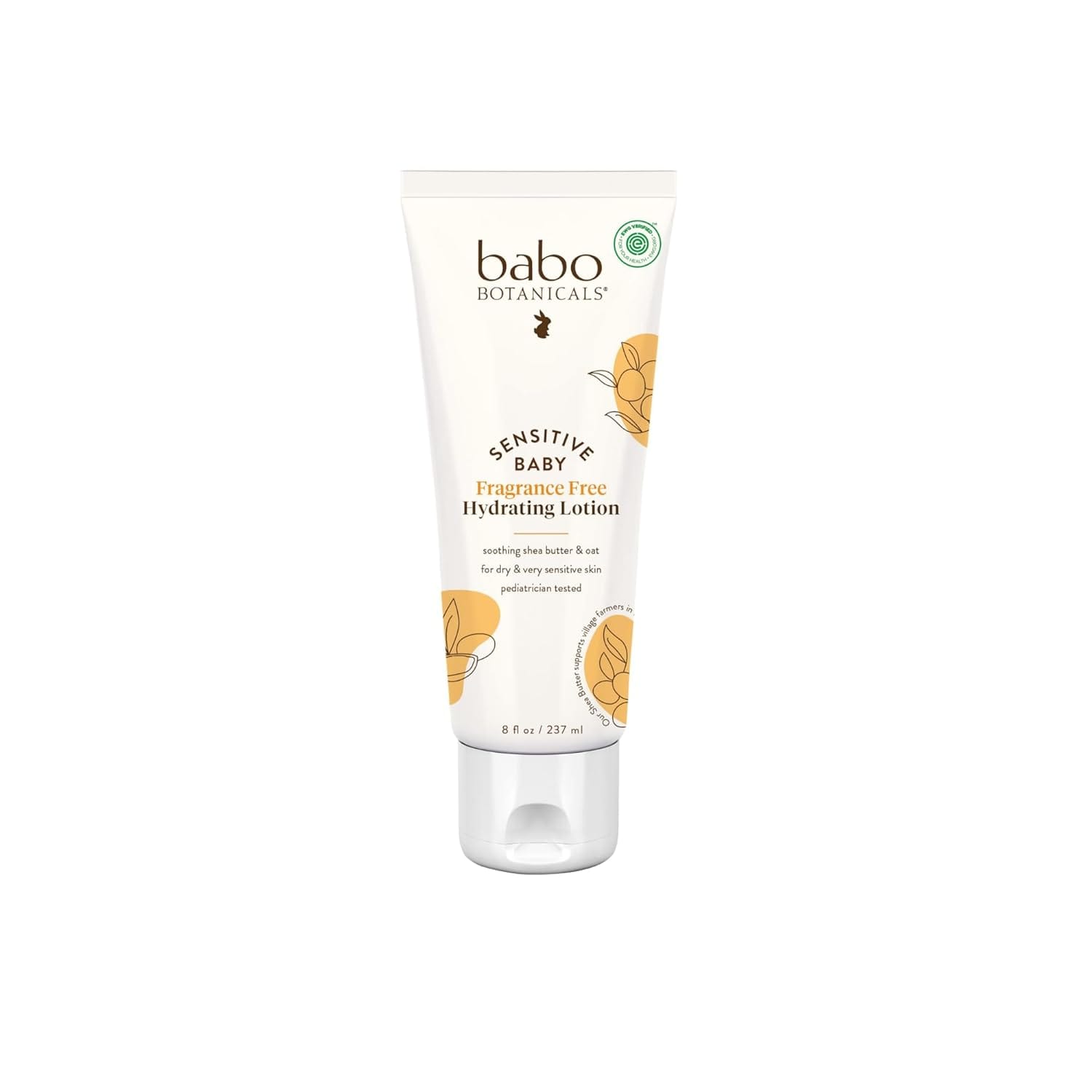
The Babo Botanicals Sensitive Baby Fragrance-Free Hydrating Lotion is the clinically-targeted option. EWG Verified status legally bars ethoxylated ingredients from the formula — no PEG compounds are compatible with the certification — and the base of shea butter and colloidal oat addresses two of the better-studied mechanisms in eczema management.
Shea butter provides occlusion. Colloidal oat (Avena sativa kernel flour) has been shown in controlled trials to reduce transepidermal water loss and pruritus in atopic dermatitis (Kurtz & Wallo, Journal of Drugs in Dermatology, 2007). Pediatrician-tested. Babo sources its shea through a fair-trade cooperative program in Ghana, disclosed on the brand site.
4. California Baby Super Sensitive Everyday Lotion — Best USDA Certified Organic option
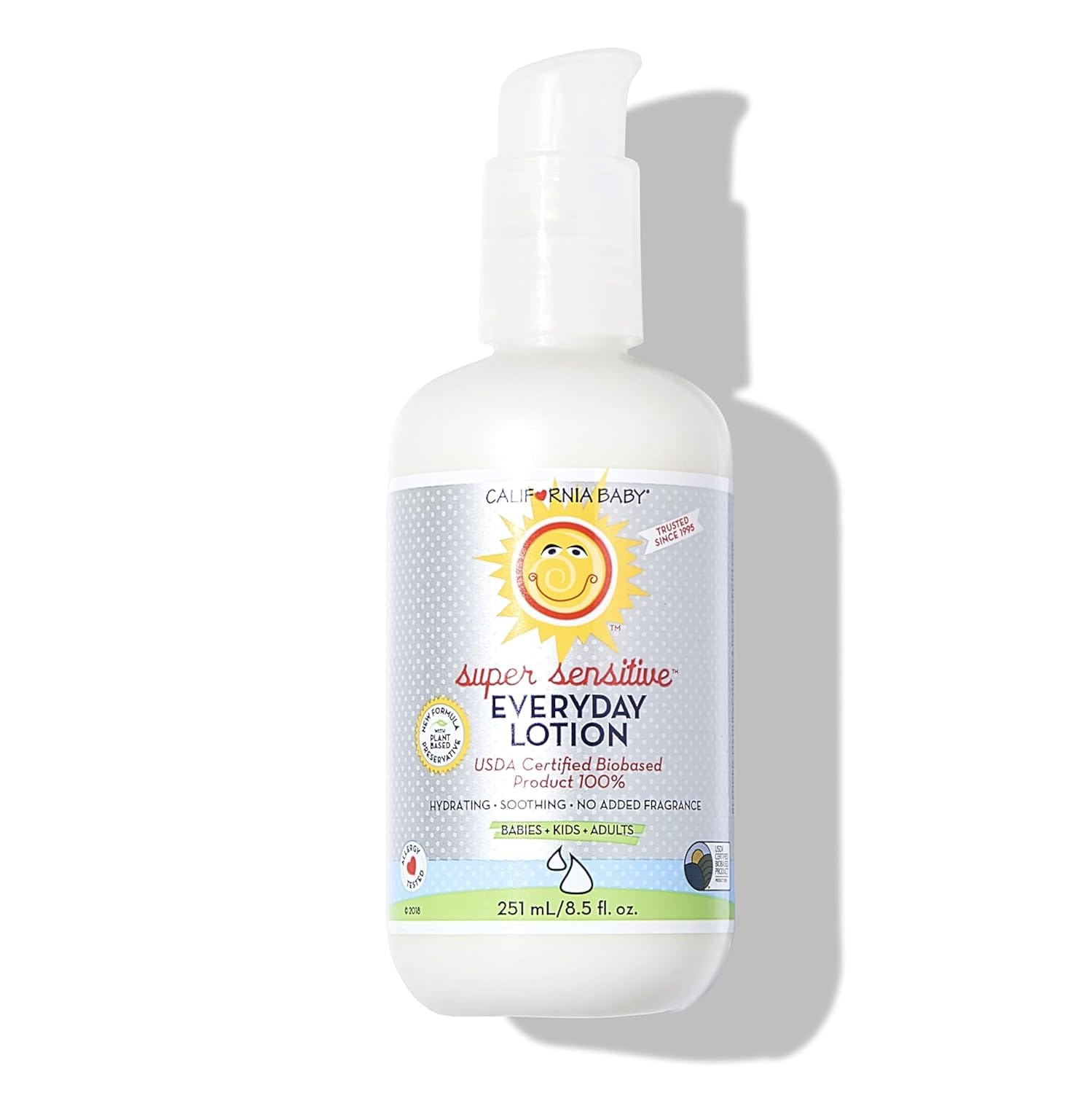
The California Baby Super Sensitive Everyday Lotion is the USDA Certified Organic entry and the most unusual preservative chemistry on the list. Instead of the standard synthetic preservative toolkit, the formula uses basil leaf extract and anise seed extract as antimicrobial isolates. Both are disclosed on California Baby's product page with their botanical Latin names and sourcing.
No phenoxyethanol, no parabens, no benzoates, no ethyl alcohol. The "no added fragrance" claim is consistent: the anise extract is present at preservation-level dosing, not scent-level — something confirmed by the INCI position in the ingredient list (near the tail, where functional-dosing actives appear). USDA Organic certification covers the ingredient sourcing through the agricultural supply chain.
5. The Honest Company Sensitive Face + Body Lotion, Fragrance Free — Best value EWG Verified pick
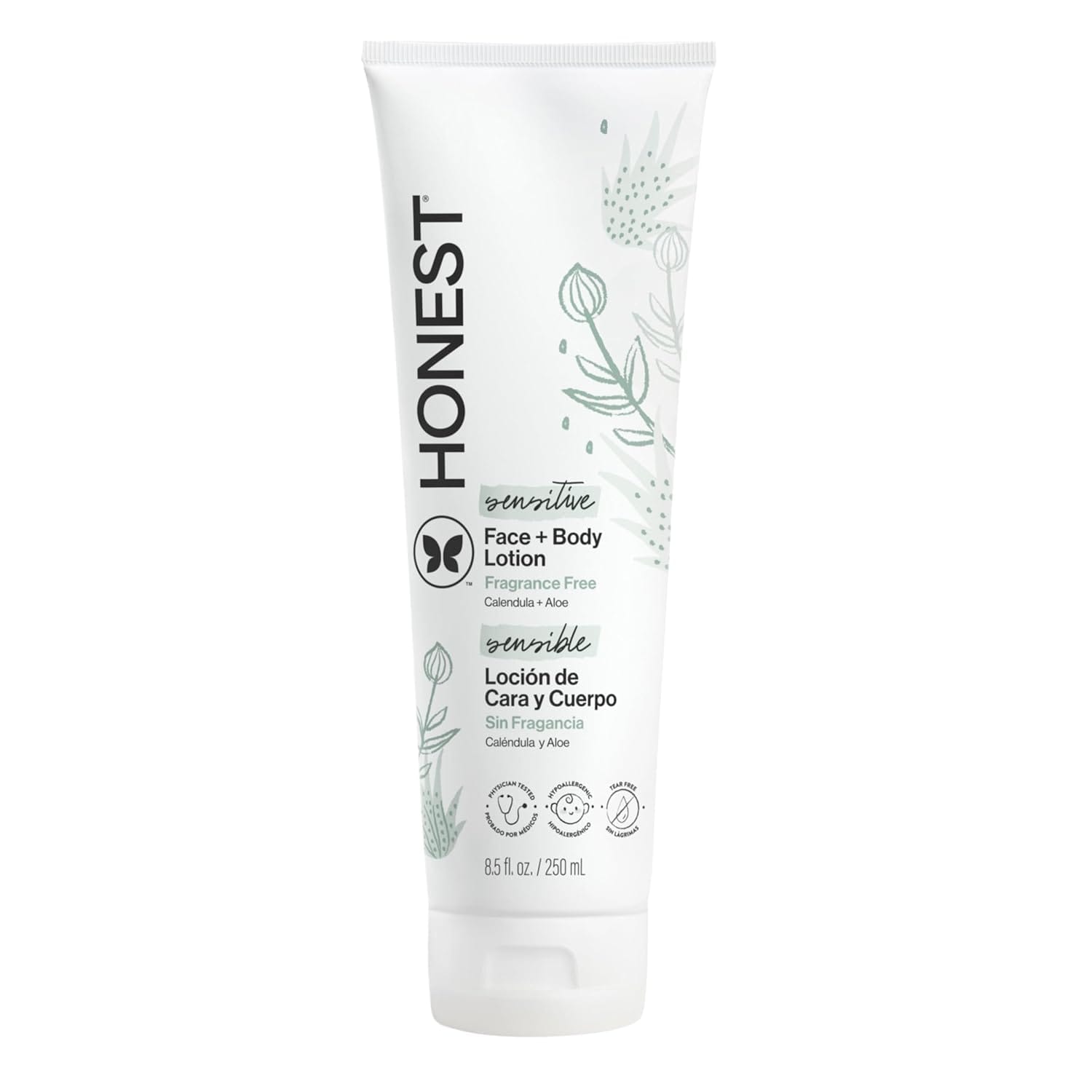
The Honest Company Sensitive Face + Body Lotion, Fragrance Free is the most accessible EWG Verified option on this list. At roughly $12 for 8.5 oz, it's the best price-per-ounce of the verified formulas. The actives are calendula and aloe — both among the best-tolerated botanicals in the infant skin literature — and the Honest Company discloses the full ingredient list on every product page.
Physician-tested and dermatologist-approved. The EWG Verified certification means the formula was independently reviewed, not self-reported. For families who want an EWG Verified formula at a mass-market price point, this is the pick.
6. Badger Baby Oil — Best minimalist pick (body oil)
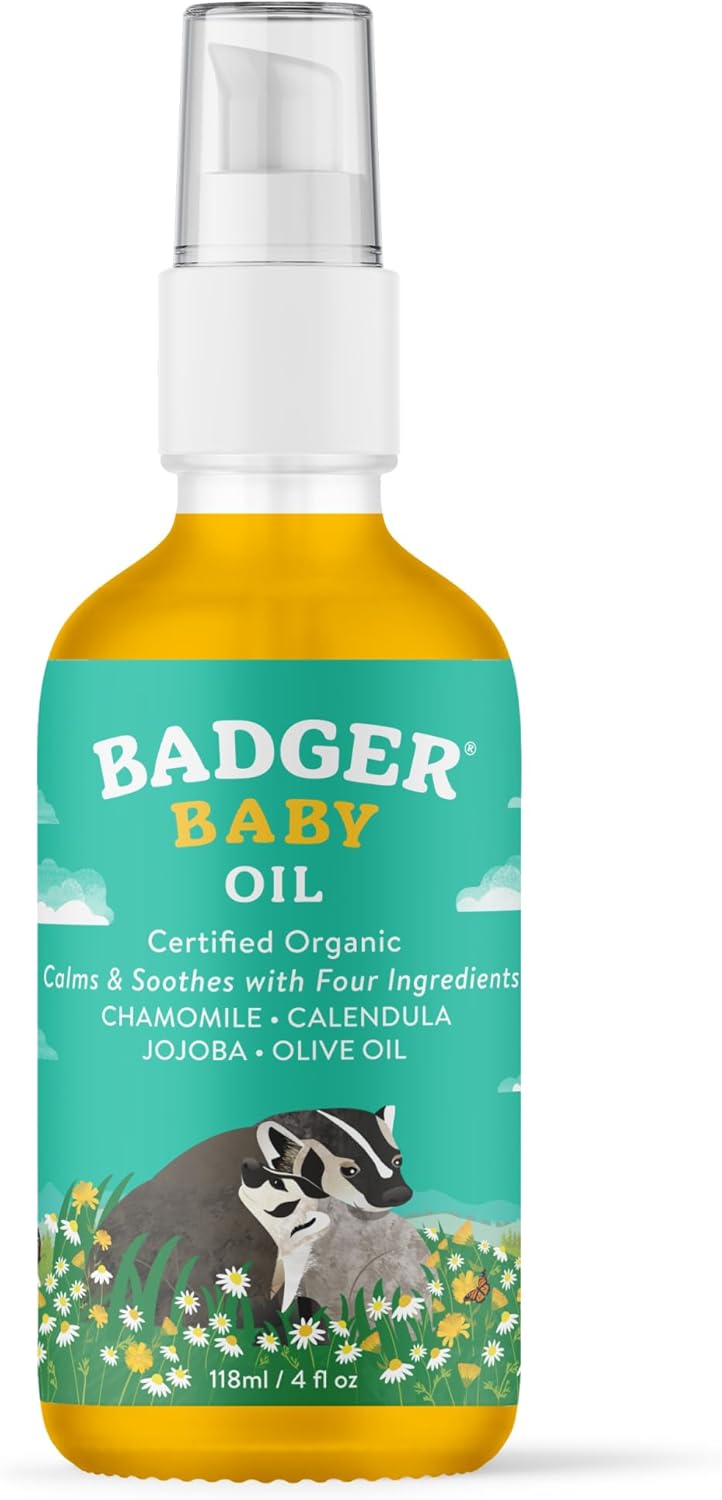
The Badger Baby Oil occupies a different category: four certified-organic ingredients, no emulsifiers, no preservatives, no water. Olive oil base, jojoba oil, organic chamomile flower extract, organic calendula flower extract. That is the entire formula.
Two clarifications before you decide: first, this is a body oil, not a lotion. It does not absorb the same way and is best applied to damp skin immediately after bathing, when it seals in moisture. Second, there is a natural mild scent from the chamomile and calendula — these are plant-sourced botanical extracts, not synthetic fragrance compounds, but parents with extremely scent-sensitive infants should be aware.
USDA Certified Organic (QAI), B Corp, and manufactured in Gilsum, New Hampshire. For parents who want the fewest possible ingredients and don't require an emulsified lotion, this is the clearest choice on the market.
What we ruled out and why
Aveeno Baby Daily Moisture Lotion — The Gimme the Good Stuff database rates this as a "Bad" product. The formula contains dimethicone, fragrance-adjacent compounds, and ingredients that score poorly on EWG's database. Aveeno's "natural oat" positioning does not disclose the full preservative and emulsifier stack.
CeraVe Baby Moisturizing Lotion — Contains phenoxyethanol. CeraVe is a clinically credible dermatology brand for adults; that clinical positioning does not transfer to infant products where EU infant standards are more conservative.
Eucerin Baby Eczema Relief Body Cream — Contains fragrance. Disqualified on that basis alone.
Tubby Todd All Over Ointment — Contains phenoxyethanol and sodium benzoate. Tubby Todd appears on both "safe" and "avoid" baby lists for exactly this reason. The formula fails the EU SCCS infant standard for phenoxyethanol concentration. The brand has significant social media reach; that reach has not changed the ingredient composition.
Burt's Bees Baby Nourishing Lotion — Contains phenoxyethanol. Also the subject of the EWG Verified/EWG score confusion: Burt's Bees baby products carry an EWG score (self-reported database entry), not the EWG Verified certification. The distinction matters.
Cetaphil Baby Daily Lotion — Contains fragrance. Cetaphil's dermatologist positioning is for adult skin concerns.
Babyganics Moisturizing Daily Lotion — The original formula contained betaine (a known irritant in some individuals) and undisclosed "natural fragrance." We could not verify the current formula had resolved these concerns at time of research.
Cover image: Pipette Baby Lotion Fragrance Free — pipettebaby.com, product image used for editorial reference.