

Why non-toxic diapers matter
A baby in diapers wears them roughly 22 hours a day for two to three years — against the most permeable, sensitive skin on their body. Conventional diapers contain petroleum-derived plastics, chlorine-bleached wood pulp, synthetic fragrances, and adhesives with undisclosed chemistry. Several of those inputs have raised flags in independent testing: in 2023 and 2024, Mamavation — a consumer advocacy group that contracts with accredited labs — found elevated organic fluorine (a PFAS proxy measure) in multiple mainstream diaper brands, including some marketed as "natural."
The good news: a growing cohort of brands publish full ingredient lists, hold third-party certifications, and test explicitly for PFAS. This guide covers the eight that cleared our bar.
What we look for
No PFAS. Synthetic water-resistant treatments are common in disposable diaper construction. PFAS — per- and polyfluoroalkyl substances — are persistent in the body and environment and accumulate in breast milk and cord blood. Every pick on this list either holds a certificate confirming non-detect, or has been tested non-detect by an independent lab.
No synthetic fragrances or undisclosed chemistry. Fragrance formulas don't require ingredient disclosure. "Fragrance-free" and a published ingredient list are the minimum standard here.
No chlorine bleaching. Most conventional diapers use ECF (elemental chlorine-free) wood pulp, which can still produce trace dioxins. Our picks require TCF (totally chlorine-free) or unbleached pulp.
Certifications that actually matter. Not all certifications carry equal weight for a product worn against skin all day:
EWG Verified®
highest bar
bans 2,000+ chemicals; requires full ingredient disclosure
OEKO-TEX Class 1
skin-contact standard
designed for products with prolonged direct skin contact
MADE SAFE
comprehensive non-toxic
screens 6,500+ chemicals of concern
OEKO-TEX Standard 100 has tiers. Class 1 — the highest — applies to products with prolonged, direct skin contact. Most brands hold OEKO-TEX Standard 100 but don't specify Class 1; Kudos is the exception. EWG Verified is the most stringent of all: it requires full ingredient disclosure AND bans 2,000+ chemicals. Only one diaper brand in the world has earned it.
Cloth vs. disposable: a lifetime cost reality check. Certified disposables on this list run $0.32–0.55/diaper, or roughly $1,800–$2,500 over a full diapering period. Cloth systems front-load the cost — GroVia's full hybrid system runs $450–600 new; Esembly's Inner + Outer Bundle runs $320–350 — but when used through a second child, or sold secondhand, the per-change cost drops well below $0.10. Over two children, a quality cloth system typically saves $3,000–4,000 versus certified disposables.
The question isn't whether cloth is cheaper. It is, by a wide margin. The question is whether the household can sustain the laundry cadence.
Our picks
1. Healthybaby Our Diaper — Best overall
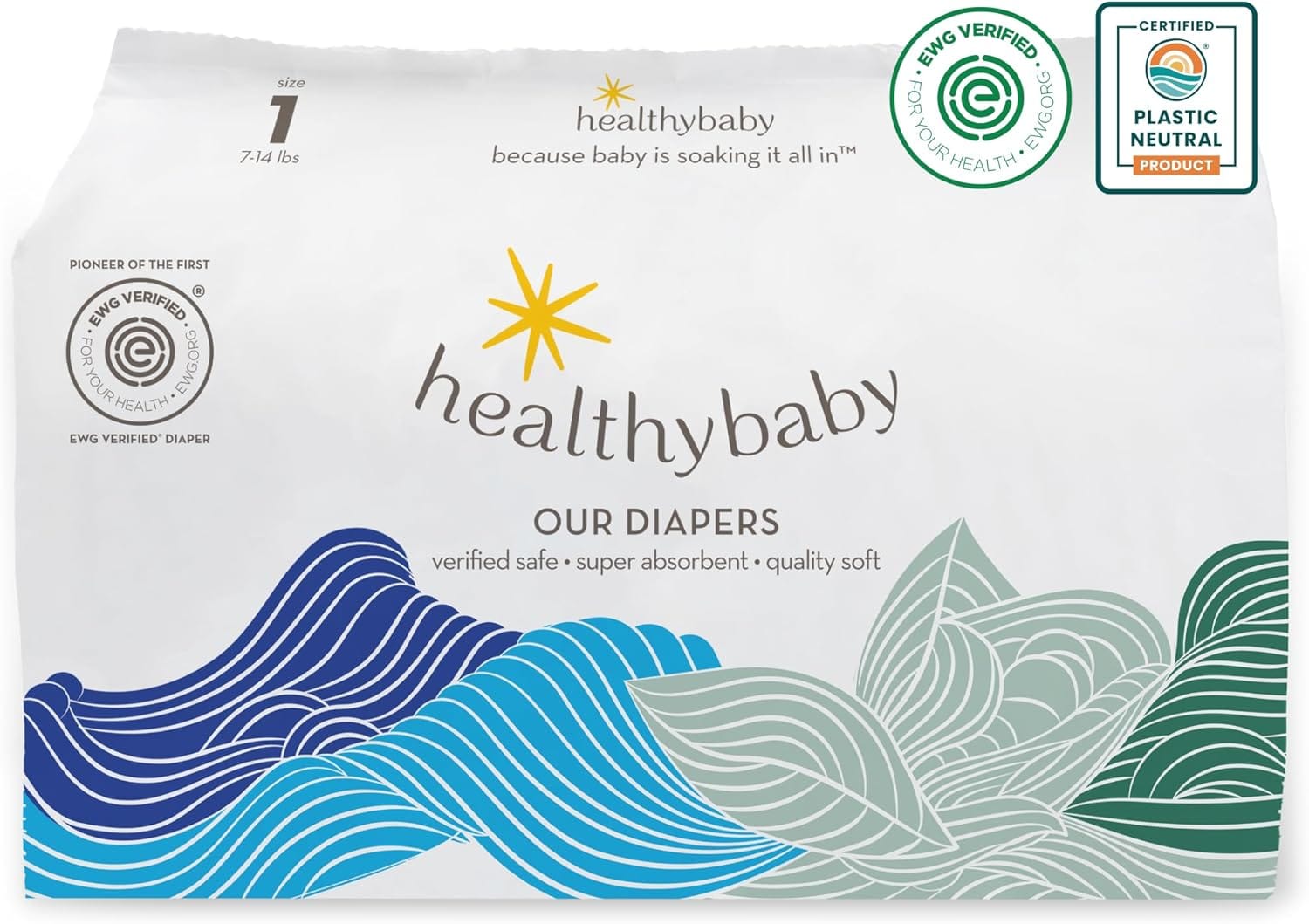
The Healthybaby Our Diaper earns the top slot not because of marketing, but because of verification depth: EWG Verified®, OEKO-TEX Standard 100, and MADE SAFE Certified, plus third-party PFAS testing by Mamavation (non-detect). The topsheet is 50% plant-based polyethylene from sugarcane and 50% polypropylene, with a 15% organic cotton outer layer. The core uses TCF (totally chlorine-free) FSC-certified wood pulp.
No fragrance, lotion, latex, chlorine bleaching, parabens, or phthalates. Every ingredient is published on the brand's website — the only disposable diaper brand where that's true. At $0.40–0.50/diaper (subscription pricing), Healthybaby runs slightly above Pampers Pure. The premium buys verified transparency rather than marketing claims. True newborn sizing is available for small or premature babies.
Sizes: NB, 1–6 | Where: Healthybaby.com (subscription)
2. Coterie The Diaper — Best performance
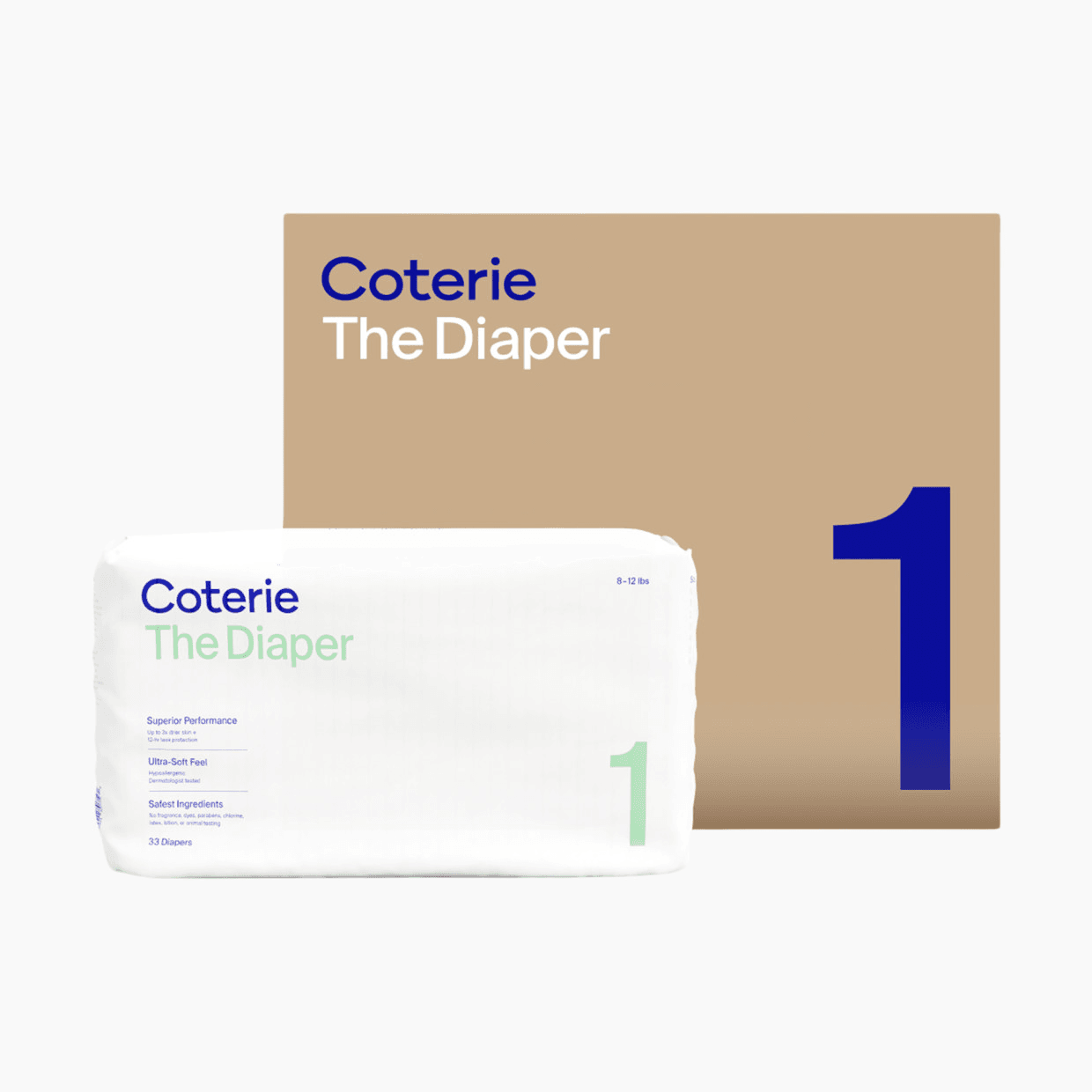
The Coterie The Diaper targets the performance end of the non-toxic market: extremely thin, extremely absorbent, with a soft plant-based PP topsheet that parents in independent reviews consistently describe as the best-fitting diaper they've tried. OEKO-TEX Standard 100 (renewed March 2025). PFAS tested non-detect by a third-party lab. Full ingredient list published on the brand's website.
Free from fragrances, lotions, latex, phthalates, and dyes. Dermatologically tested hypoallergenic. At $0.45–0.55/diaper, it sits at the premium end, but leak performance is notably above most certified alternatives — useful for heavy sleepers and long car trips. Coterie also offers true newborn sizing for premature and small newborns, alongside Healthybaby the only certified brand to do so.
Sizes: NB, 1–6 | Where: Coterie.com (subscription and one-time)
3. Kudos Diaper — Best for sensitive skin

Every other disposable diaper on this list places synthetic polypropylene against a baby's skin. The Kudos Diaper uses 100% pure cotton — their TruCotton process — as the topsheet. For babies with eczema, contact dermatitis, or persistent rash from synthetic-contact diapers, the cotton topsheet is where to start.
OEKO-TEX Standard 100 Class 1 — the tier specifically designed for prolonged skin contact. USDA Biobased certified. TCF wood pulp core. No fragrances, lotion, latex, chlorine bleaching, parabens, or phthalates. The brand confirms PFAS non-detect on current production. At $0.36–0.41/diaper (subscription), Kudos prices competitively. The cotton topsheet does not compromise absorbency — it sits above a standard SAP core.
Sizes: 1–6 | Where: mykudos.com (subscription)
4. Dyper Bamboo Diaper — Best bamboo / most compostable

The Dyper Bamboo Diaper is the best choice for households where both the materials and the end-of-life matter. The bamboo viscose is made via a closed-loop manufacturing process that recaptures chemical solvents — a meaningful distinction from conventional bamboo viscose, whose manufacturing typically releases those solvents into waterways. USDA certified 55% plant-based.
PFAS tested non-detect by both Mamavation and Bureau Veritas, an accredited independent lab — dual-lab verification unusual in this category. No fragrances, lotions, latex, rubber, dyes, alcohol, parabens, phthalates, pesticides, chlorine, or VOCs. The optional ReDyper mail-in composting service converts used diapers into commercial compost — one of very few disposable diaper brands to address end-of-life accountability. At $0.32–0.38/diaper (subscription), it's also one of the more affordable certified options.
Sizes: NB–6 | Where: dyper.com (subscription)
5. Eco by Naty Diaper — Most certified / most accessible
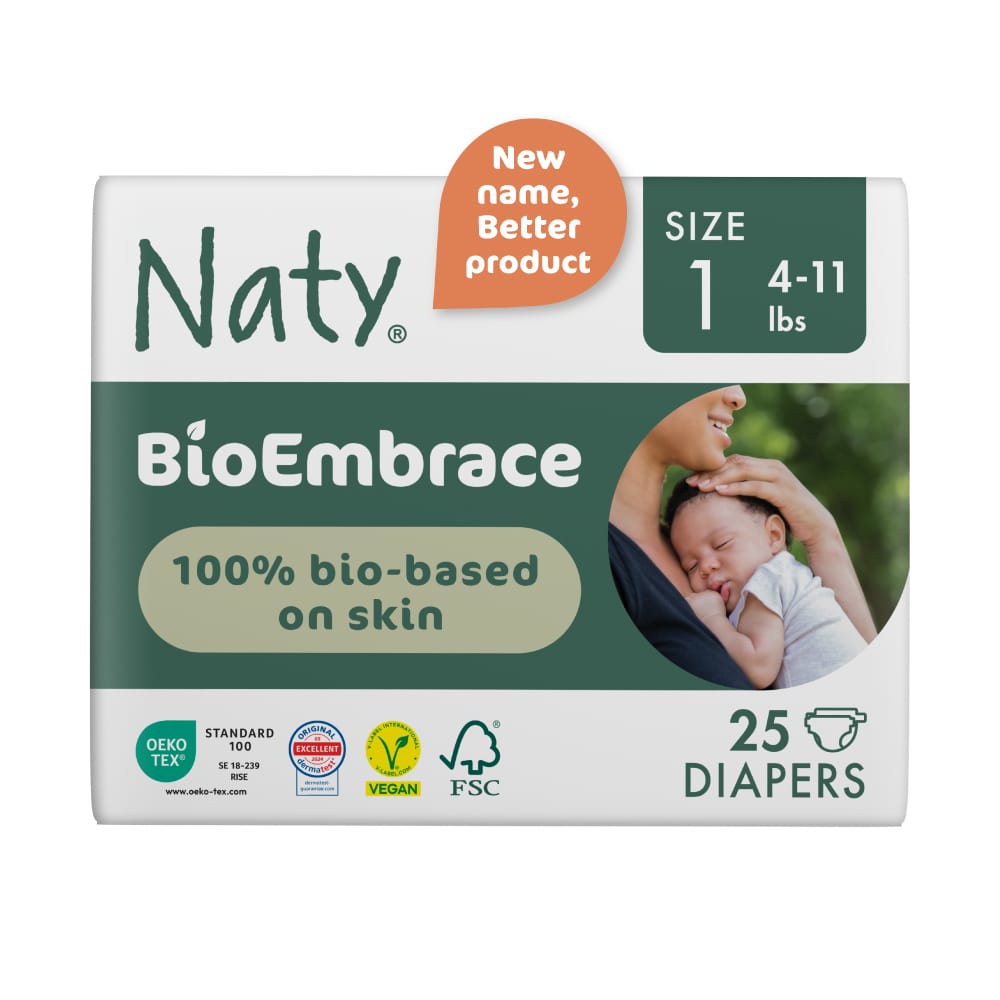
The Eco by Naty Diaper holds more independent certifications than any other product on this list: OEKO-TEX Standard 100, FSC, Dermatest "Excellent," DIN CERTCO Plant-Based, Vegan Society, and TUV Austria OK biobased — the last one a global first among diapers. All skin-contact layers are 100% plant-based, sourced from sugarcane, corn, wood pulp, and cotton. TCF, no PFAS, parabens, phthalates, or synthetic fragrances.
The most important practical distinction: Eco by Naty is sold at Target and Amazon, making it the most accessible certified option for parents who need same-day access or can't commit to a subscription. At $0.31–0.40/diaper, it's also competitively priced for the category.
Sizes: NB–6 | Where: Target, Amazon, naty.com
6. Parasol Co. RashShield Diaper — Best value with strong safety

The Parasol Co. RashShield Diaper stands out at the value end of the certified market. At $0.27–0.45/diaper, it delivers one of the longest free-from lists among affordable options: chlorine, parabens, phthalates, synthetic fragrances, lotions, latex, dyes, petroleum oils, optical brighteners, VOC adhesives, and formaldehyde.
The structural distinction: the Lycra fiber used in the leg cuffs carries Cradle to Cradle Gold certification for material health — an unusual level of structural-component accountability in a disposable diaper. FSC-certified wood pulp. Bio-based adhesive. OEKO-TEX Standard 100. The brand claims PFAS non-detect; third-party lab verification is not yet independently published, which is the reason it ranks sixth rather than higher.
Sizes: NB–6 | Where: parasolco.com
7. GroVia Hybrid Diaper System — Best cloth/hybrid
The bridges the gap between cloth and disposable. A reusable shell — GRS certified recycled polyester with mechanically bonded TPU waterproofing, no PFAS-based DWR treatments — pairs with either 55% hemp / 45% cotton cloth soakers or compostable BioSoaker inserts when laundry isn't practical. The shell never contacts skin; only the soaker does.
The hybrid model means you're not locked into one system: BioSoakers when traveling, cloth soakers at home. The shell is wiped and reused; only the soaker is replaced at each change. OEKO-TEX Standard 100 for the cloth inserts. Lifetime cost for a full system runs $450–600, spread across two or more children. Per-change cost on cloth, averaged over the full lifetime, is well under $0.05.
Where: grovia.com
8. Esembly Cloth Diaper System — Best cloth / cleanest materials

The Esembly Cloth Diaper System is the cleanest-materials option among cloth alternatives. The inners — the part that contacts skin — are 100% unbleached organic cotton: no chlorine processing, no synthetic fibers. The waterproof outers are GRS certified upcycled polyester, and they never contact skin. OEKO-TEX Standard 100 certified. Free from lead, BPA, PVC, and phthalates per brand testing.
Esembly runs a circular take-back program: worn-out diapers are accepted for recycling rather than landfill. Sizing starts at 7 lbs — not a premature or true newborn size — making it best suited for babies born at or above average weight. An Inner + Outer Bundle (24 inners + 8 outers) runs $320–350. A Try-It Kit at $50–60 lets households test the system before committing.
Where: esemblybaby.com
Cover image: MART PRODUCTION via Pexels (Pexels License) — source.
